'IT'S MORE FUN' HERE, PHILIPPINES TELLS TRAVELERS

The Philippines is highlighting the ebullient nature of Filipinos in acampaign to draw more visitors to Asia's tourism laggard.The country says: "It's more fun in the Philippines."Tourism Secretary Ramon Jimenez says, "What differentiates the Philippines from other offerings is the Filipino.

'SENDONG' DEATH TOLL IN PHILIPPINES MAY REACH 3,000

It's going to be "Silent Night" on Christmas Eve for thousands of people who lost their loved ones in the worst storm to hit the country this year. Many households in the flood-ravaged cities of Cagayan de Oro and Iligan are grieving. There will be no fireworks, not even firecrackers there. Instead, candles will be lit in houses where power has yet to be restored, and in funeral wakes..

SYRIA BURIES VICTIMS OF CONTESTED BOMBING

Crowds waving Syrian flags and pictures ofPresident Bashar al-Assad gathered on Saturday to bury 26 people who the authorities said were killed by a suicide bomber at a busy Damascus crossroads.

PHILIPPINES TO SHUT SOME MINES AFTER LANDSLIDE

The Philippine government on Friday ordered the shutdown of gold-mining tunnels threatened by landslides in a southern town where a chunk of a mountain tumbled down on sleeping residents, killing at least 27 people. The landslide struck hours before dawn Thursday on a mountain dotted with mine shafts and crude shanties with corrugated metal roofs in Napnapan village in Compostela Valley province.

SOUTH KOREA TAKES "MAJOR STEP" TO ACCEPTING CANADA BEEF

South Korea has taken a "major step" to ending an eight-year-old ban on imports of Canadian beef, Canada's agriculture and trade ministers said on Friday. The South Korean Parliament ratified import health requirements for Canadian beef under 30 months of age on Friday, one of the final steps to ending the ban, the ministers said in a release. South Korea is the last major beef-importing country to agree to lower its restrictions on Canadian beef, since a 2003 case of mad-cow disease (BSE) in Canada.

Showing posts with label Local. Show all posts

Sunday, May 30, 2010

Keep off JEJEMONS, students' group tells DepEd


“JEJEMONS” ARE UNACCEPTABLE but so are the shortages of classrooms, teachers and textbooks.


Instead of going after the “jejemons,” the Department of Education (DepEd) should focus on solving major problems like classroom and book shortages, the National Union of Students of the Philippines (NUSP) said Saturday.


NUSP president Einstein Recedes said the DepEd’s “declaration of war” against the jejemons—or those who have a peculiar way of writing English, mangling grammar and spelling in the process—was “shallow” and that “it eclipsed the pressing concerns of the youth by paying too much attention to a [form of] text-speak. ”


“Two weeks before the start of classes, DepEd warns the public about “jejemon” as an impediment to the youth’s learning. Despite the issues on the lack of classrooms, derelict facilities, underpaid teachers, high dropout rates, corruption cases, DepEd chose to campaign against a subculture,” Recedes said.


He added that the DepEd’s campaign against “jejemon” was “not [simply] forgetting the urgent matters it should be focusing on ... [it was] deeply rooted [in] the department’s skewed attitude on education issues.”

Wednesday, March 10, 2010

Philippines ranked 4th most corrupt in AsPac: survey


MANILA, Philippines - The Philippines was rated the fourth most corrupt of 16 major Asia-Pacific investment destinations, according to a business survey released on Monday.
The survey conducted by the Hong Kong-based Political & Economic Risk Consultancy showed the Philippines ranking fourth from the bottom of the 16-nation list with a score of 8.06.
The country, which was ranked Asia's most corrupt country in the 2008 survey, had a rating of 7.0 last year, making it the sixth most corrupt nation last year.
Indonesia scored 9.07 out of 10 as the most corrupt nation in the 2010 survey, up from 7.69 points a year ago. The PERC survey polled 2,174 middle and senior business executives in Asia, Australia and the United States.
Cambodia was ranked second most corrupt, followed by Vietnam, the Philippines, Thailand, India, China, Malaysia, Taiwan, South Korea, Macao, Japan, the United States, Hong Kong, Australia and -- rated as the least corrupt in the survey -- Singapore.
The survey looked at how corruption affected different levels of political leadership and the civil service, and how major institutions fared in terms of corruption.
It also examined how corruption is perceived to affect the overall business environment, and how easy or difficult it is for companies to deal with the problem internally and externally when they encounter it.
Below is the corruption scores of 16 Asia-Pacific economies as seen in a survey of 2,174 expatriate business executives by the Political and Economic Risk Consultancy (PERC).
On a scale of zero to 10, zero is the best possible score, indicating the lowest level of corruption among

Monday, March 8, 2010

Magat Dam may stop releasing water for irrigation


BAYOMBONG Nueva Vizcaya - If water levels continue to drop, Magat Dam in Northern Philippines may have to stop providing water for irrigation before the end of March.

Engineer Saturnino Tenedor of the Magat Dam’s irrigation department told GMANews.TV that the dam’s current water level could only last for a few more weeks.

The National Irrigation Administration (NIA), which manages the dam, has started to ration water for release to agricultural lands in Isabela last January.

But after the dam’s water level has dropped to critical lows, NIA officials said that they will have no recourse but to close its gates for water distribution especially if no rains will come in the coming weeks.

“Sa tantya namin baka March 21 ay tuluyan nang itigil ang pag release ng tubig," Tenedor said, adding that by the time NIA closes its gates, the farmers would have already harvested all their produce.

(Based on estimates, we might stop releasing water by March 21.)

“But the problem does not end there," he said. “If rains will not come to replenish the (water) reservoir, there will be no water available to irrigate farms for the next planting season which starts in June."

The 30 year-old Magat Dam, once Asia’s biggest, is the source of water for some 84,000 agricultural lands in Cagayan, Isabela and Quirino.

Some 100, 000 hectares of farmlands in Isabela alone had been affected by the rainless season that was first felt last December. The province has already lost nearly P4 billion worth of corn and rice crops.

As of 11 a.m. of Sunday, March 7, the dam’s water levels further dropped to 154.55 meters, which is already way below the normal level at 183 meters.

In the meantime, Magat power plant officials also disclosed that the record drop in the dam’s water level has drastically cut its capacity to operate at normal levels.

Melvyn Eugenio, plant manager of the Magat hydro-power plant said generation capacity is now down to only 20 megawatts with power supplies becoming more intermittent.

The dam’s minimum operational water level is 160 meters to be able to generate the desired amount of stable electricity.

Generating a maximum of 360 megawatts, it is second to San Roque Dam in Pangasinan as the biggest electricity provider among hydro plants in the Luzon grid.

Also experiencing critical water levels are Angat and Ipo dams in Bulacan; Ambuklao and Binga dams in Benguet; La Mesa dam in Quezon City; Nueva Ecija’s Pantabangan dam; and the San Roque dam in Pangasinan.

When President Gloria Macapagal-Arroyo’s paid a visit last week to Isabela province, she made assurances that her government is doing its best to prevent power shortage.

The power outages were due to mechanical troubles in the coal-fired power plants of Masinloc and Sual. The said plants also act as back up whenever shut downs occur in hydro-powered plants, she said. 
- RJAB Jr., GMANews.TV

Source: gmanews.tv

No Filipino casualty in Turkey quake - DFA


There were no Filipino casualties reported in the 6.0-magnitude earthquake that hit Turkey, the Department of Foreign Affairs (DFA) said on Monday.

"The Philippine Embassy in Ankara informed the DFA that there is no reported injury or casualty among Filipinos during the earthquake that hit the province of Elazig in Eastern Turkey," DFA spokesperson Eduardo Malaya said in a text message to GMANews.TV.

"Most of the Filipinos, who number some 5,500, reside in the city of Istanbul and nearby areas," he added.

As of 2008, the Commission on Filipinos Overseas estimates there are 5,444 Filipinos in Turkey.

Of the figure, 82 are recorded by the Philippine Overseas Employment Administration as overseas Filipino workers.
 - Jerrie Abella/KBK, GMANews.TV


Source: gmanews.tv
http://www.gmanews.tv/story/185635/no-filipino-casualty-in-turkey-quake-dfa

Weatherman explains summer cold mornings


Philippine Atmospheric, Geophysical and Astronomical Services Administration (PAGASA) deputy administrator for operations and services Nathaniel Cruz said the cloudless sky at night allows heat accumulated in the day to escape without restraint, resulting in cold early morning temperatures.


''What's happening is that we have cloudless sky at night. That is why earth's radiation or heat from the sun is not trapped and goes freely,'' Cruz said in an interview.
The minimum temperature recorded at the PAGASA Science Garden in Quezon City at 6 a.m. Sunday was 23 degrees Celsius, up by about 2 degrees Celsius from the minimum temperature recorded on Saturday at 21.6 degrees Celsius.
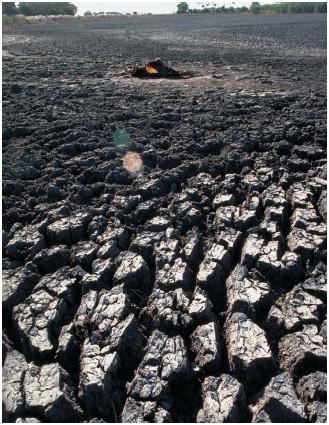
The cold early mornings in most parts of the metropolis are occurring at a time when the country is experiencing the impact of El Niño - the unusual warming of surface water at the Pacific Ocean that causes drought.
PAGASA said the prevalence of the ridge of the high pressure area over the country will continue to bring ''warm weather'' condition in the coming days. It warned the public to refrain from going out on the sun particularly between 10 a.m. to 3 p.m.
The weather bureau so far recorded the hottest day of the year in Metro Manila last March 6 with a temperature of 35.8 degrees Celsius.
In the PAGASA's 5 a.m. weather bulletin Sunday, the ridge of high pressure area is found to be extending across Luzon and Visayas.
It said that the entire archipelago will experience partly cloudy to cloudy skies except for isolated rainshowers or thunderstorms mostly over the eastern section.
''We have cloudy skies (in Metro Manila) sometimes but chances are still quite small that there will be rains in the coming days,'' Cruz said.
Meanwhile, moderate to strong winds coming from the east to southeast will prevail over the eastern sections of Luzon and Visayas and coming from the northeast over eastern Mindanao and the coastal waters along these areas will be moderate to rough.
Elsewhere, winds will be light to moderate blowing from the east to northeast with slight to moderate seas.
PAGASA said the El Niño-induced dry spell continuously affects the decline of water levels in major dams in the country.
It also significantly affected the water resource for power and irrigation supply over the affected areas in Luzon.
The Angat Dam, which is the main source of Metro Manila's domestic water supply has been threatened to reach the critical level if the ongoing dry condition continue for the next three months, PAGASA said.
Source: news.yahoo.com and mb.com

Tuesday, March 2, 2010

Arroyo pauses in her speech as magnitude-6.1 quake jolts Cagayan


President Gloria Macapagal-Arroyo was in the middle of her speech in Cagayan when the earth suddenly shook Tuesday morning.

She immediately stiffened, then paused in her speech, which dealt with the government's agriculture projects in the said northern Luzon province, according to radio dzMM.

What Mrs. Arroyo felt beneath her feet was a magnitude-6.1 earthquake that struck the area at 10:51 a.m., according to the government-run Philippine Institute of Volcanology and Seismology (Phivolcs).

The tremor's epicenter was traced some 130 kilometers north of Cagayan province's Tuguegarao City, Phivolcs said.

It was the third significant quake of tectonic origin that hit the Philippines since the magnitude-8.8 tremor shook Chile last February 27.

A magnitude-5.1 quake rocked parts of Batanes in extreme northern Luzon shortly after midnight Sunday. On Monday, a magnitude-5.0 tremor jolted parts of Davao Oriental province.

Tuesday’s earthquake was felt at Intensity V in Cagayan's Sta. Ana and Aparri towns; at Intensity IV in Vigan, Ilocos Sur; Intensity III in Laoag and Pasuqin, Ilocos Norte, Palanan in Isabela, and Tuguegarao City; Intenisty II in Albano, Isabela; and Intensity I at the Manila Ocean Park in Manila.

Phivolcs director Renato Solidum assured the public that the seismic disturbance would not pose any danger to life and properties, let alone trigger a tsunami in the seas.

"
Hind po masyadong malakas ito. Dapat siguro mga [magnitude] 7, maliit na tsunami pa nga iyon. (It's not that strong. Even with a magnitude-7 quake, only small tsunamis are created.)," Solidum told radio dzBB in an interview on Tuesday.

Gov. Alvaro Antonio said the earthquake did not wreak havoc in the province and the locals did not even panic. He said he was attending a program when the quake struck.

"
Wala namang epekto ang lindol na nangyari... Mild lang iyon. It took only about 15 seconds na medyo naramdaman ang lindol iyon (The quake had no adverse effect. It was only mild. It was only felt for 15 seconds)," Antonio told dzBB in a separate interview on Tuesday.

"
Nasa programa ako kanina, punung-puno ang stadium na pinangyarihan ng programa. The full-packed stadium, nobody panicked (I was at a program a while ago, the stadium was jam-packed and nobody panicked)," he said. - MARK D. MERUEÑAS/ARCS, RJAB Jr., GMANews.TV


Source: gmanews.tv
http://www.gmanews.tv/story/185092/arroyo-pauses-in-her-speech-as-magnitude-61-quake-jolts-cagayan

Wednesday, February 24, 2010

Comelec makes last-minute change in ballot box design

The Commission on Elections (Comelec) has decided to alter the appearance of the ballot box that will be used in the May automated elections as an additional measure to protect the ballots.

The ballot box would now be black instead of transparent in order to protect the UV markings on the ballots, according to Comelec spokesman James Jimenez in an interview Tuesday.

“The UV markings are susceptible to sunlight," Jimenez explained. “When you have the markings exposed to sunlight for an extended period of time, then they might fade, so that’s why it has to be black." 

The ballot boxes will be placed under the Precinct Count Optical Scan (PCOS) machines. The new ballot box design is 34 inches in height, 36 inches in length, and 20 inches in width.

The poll body and the National Printing Office had earlier said they would each put UV markings on the ballots being printed for the elections. The UV mark will prove the authenticity of the ballot.

The counting in the May elections will be automated, but ballots will still be counted manually for the random audit and for any future electoral protest.

“If a recount has to be carried out, you’re checking the ballots then suddenly your ballots don’t have UV marks, so what were original ballots in the beginning might suddenly look like fake ballots. So you have a false result," said Jimenez.

He said there is nothing wrong in the last-minute change of the ballot box design. “There is nothing wrong with changing the design of the box, [it was] designed… for [an] additional measure of security."

Jimenez assured that despite the dark color, the public and other stakeholders could still see the inside of the ballot box through the translucent rectangular windows on each of its sides. 

Tuesday, February 16, 2010

Cagayan under state of calamity due to El Niño

SANTIAGO CITY, Isabela – Cagayan province in northern Luzon has been placed under state of calamity to mitigate the impact of the El Niño phenomenon on its farmlands.

Governor Alvaro Antonio said the provincial government had no choice but to declare a state of calamity since efforts by the Department of Agriculture (DA) to lessen the impact of the phenomenon have not been enough.

“We cannot wait anymore for the DA’s move. We need to swiftly act on the problem" he told GMANews.TV in an interview.

Cloud seeding operations subsidized by the DA have been unsuccessful due to absence of clouds in the past days.

The provincial board passed the resolution Monday morning.


Antonio said farmers had lost about P300 million worth of palay (rice grains) and P600 million of corn products in January.

“We have started experiencing rain less days since December of last year. If this goes on until the end of June then we will have a very serious rice problem in areas where we supply the bulk of our produce," he said.

Cagayan is the foremost producer of corn and second only to Isabela as the biggest rice producer in the country. The province supplies most of the rice requirements of Region I, Metro Manila, and Regions 4a and 4b. It provides 25 percent of the country’s rice needs.

Monday, February 8, 2010

Dry spell in 14 provinces


By JC BELLO RUIZ  (Manila Bulletin)
February 7, 2010, 5:46pm
Fourteen provinces are reeling under dry spell conditions based on rainfall observation conducted in January, according to the state-run Philippine Atmospheric, Geophysical and Astronomical Services Administration.
In its latest El Niño bulletin (Advisory No. 6), PAGASA said the dry spell areas are mostly in Luzon, and the rest in the Visayas. These are the provinces of Benguet, Batanes, Cagayan, Isabela, Nueva Vizcaya, Bulacan, Nueva Ecija, Pampanga, Batangas, Iloilo, Antique, Guimaras ,and Negros Occidental.
Some areas of Capiz province are also experiencing drought conditions, the weather bureau said.
“Ang mga nararamdaman natin na may kainitan na ay mga senyales na magtatag-araw na at kapag nagpatuloy ito ay mahaba ang panahon ng tag-araw dahil sa El Niño na umiiral sa bansa,” said Robert Sawi, chief of PAGASA's weather forecasting section.
Field reports gathered by the Bulletin also showed that many areas have been experiencing low water supply due to the persistent abnormal low rainfall conditions, prompting government agencies particularly the Department of Agriculture to map out contingency plans to mitigate its effects on the critical sector.
Even Malacañang last week appealed to the public to conserve water in the face of the problem.
In its previous El Niño bulletin (Advisory No. 5), PAGASA’s list of drought-hit areas included Aurora, Quezon, Marinduque, Mindoro, Romblon, Sorsogon, Camarines Norte, Camarines Sur, Northern Samar, Aklan, Guimaras, Biliran, Davao del Sur, South Cotabato, Sarangani and Sultan Kudarat.
“Overall assessment of rainfall for the month of January was below to way below normal in most areas of Luzon and Region VI (Western Visayas). Near normal condition was observed in Regions IV-B (Mimaropa), Bicol Region, Central Visayas, Northern Samar, and Central Mindanao. The rest of the Visayas and Mindanao have received above normal rainfall,” PAGASA said.
“Prevalence of the northeast monsoon affected the eastern portions of Visayas and Mindanao that brought rain for several days and eased down the dry spell conditions experienced over the affected areas during the month of December,” PAGASA added.

“

Saturday, February 6, 2010

Comelec warns Political Ads to limit at 120 minutes on TV

By Kristine L. Alave
Philippine Daily Inquirer


            WITH CANDIDATES splurging on advertisements and the election campaign shaping up to be the most expensive yet, the Commission on Elections has warned it will be very strict in enforcing the rules and will not hesitate to throw the book at erring politicians.

            Under election rules that will take effect during the campaign period, national candidates are limited to only 120 minutes of airtime on television and 180 minutes on radio for the entire campaign. Local candidates are limited to an hour of television airtime and an hour and a half of radio airtime.
The Comelec released late Thursday the campaign rules and regulations for the May elections, saying it was encouraging voters to be vigilant in reporting violations by candidates.
The campaign period starts on Feb. 9 for national candidates and March 26 for local candidates. It ends on May 8, two days before the precincts open on May 10.
“We are encouraging the public to be vigilant. We are encouraging the public to file cases if they feel that violations have occurred,” Comelec spokesperson James Jimenez said.
Comelec Chair Jose Melo warned that candidates who violate the campaign rules can be charged with election offenses. If convicted, they can be barred from running for public office again.

DISCLAIMER

thenoviny.blogspot.com claims no credit for images/videos/links or any content of this blog unless it is noted. The multimedia objects appear in this blog belongs to their respected owners.
If you believe that you own the right of any visual objects in this site and wish not to appear here or you believe that is incorrectly credit please email me at myeunni@ymail.com and an necessary action will be done.
Twitter Delicious Facebook Digg Stumbleupon Favorites More